
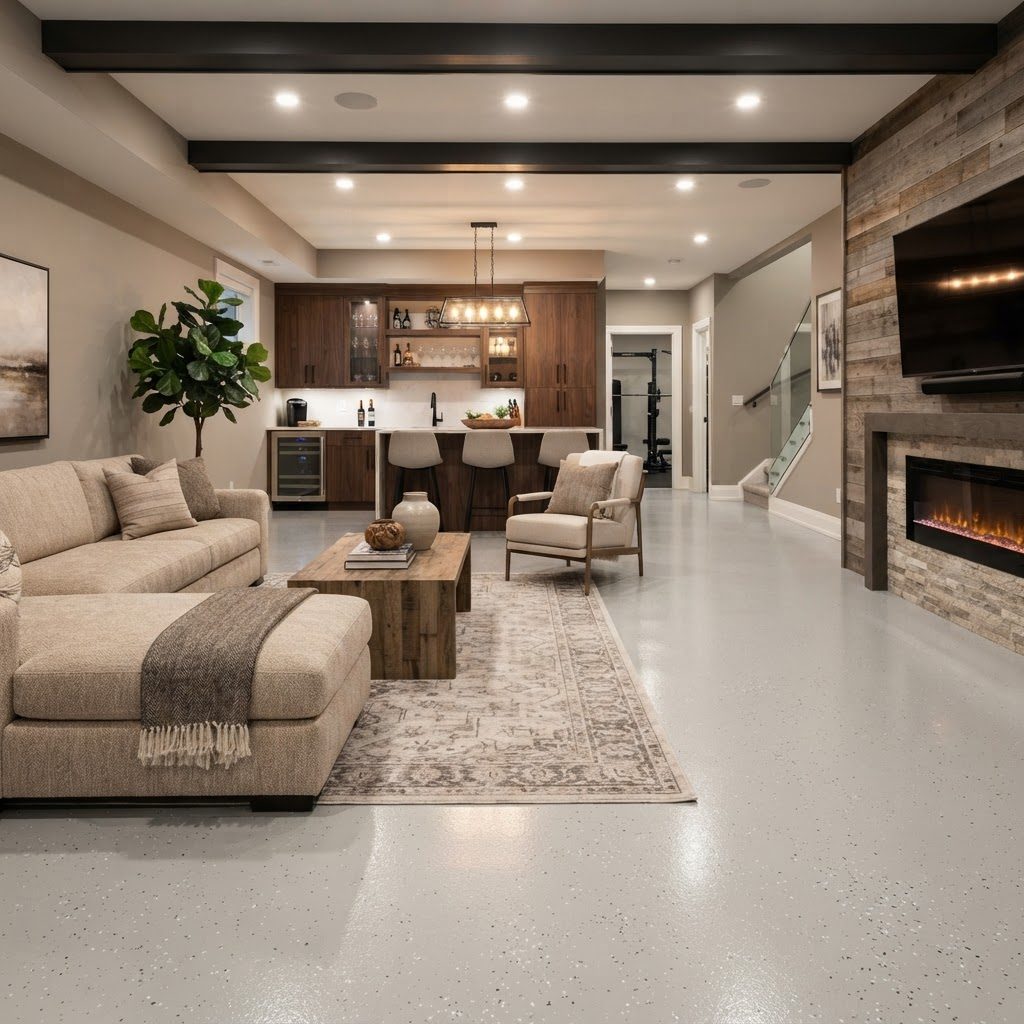
Turn cold, damp concrete into a room you’ll actually use
Every basement starts with a moisture test, not a colour chart; because a floor that can’t tolerate vapor is a floor that fails from underneath. Installed on a vapor-tolerant system, sealed seamless, ready for furniture in a day.
A system built for what’s below the slab, not just on top of it
Basements fail differently than garages. The slab sits against soil and a water table, not open air; so before we talk finishes, we find out what that concrete is actually dealing with.
Moisture testing before anything else
We test vapor emission and relative humidity in the slab before quoting a system. It’s the single biggest reason basement coatings fail elsewhere, and it’s the reason ours don’t.
Vapor-tolerant epoxy base
A moisture-mitigating, 100%-solids basecoat rated to handle the vapor drive a below-grade slab produces, so the coating bonds instead of blistering.
Seamless, mould-resistant topcoat
A non-porous polyaspartic wear layer with no grout lines or seams for moisture or dust to hide in; warmer underfoot than bare concrete and easy to keep dry.
Built to numbers, not to eye
100%
Slabs moisture-tested first
18+
Mils dry-film thickness
1 day
Typical installation
15 yr
Workmanship warranty
Understated finishes for a space you live in
Basements read best as a room, not a workshop; so most homeowners choose calmer, quieter finishes than the garage. Every sample below is a real Resinate install.
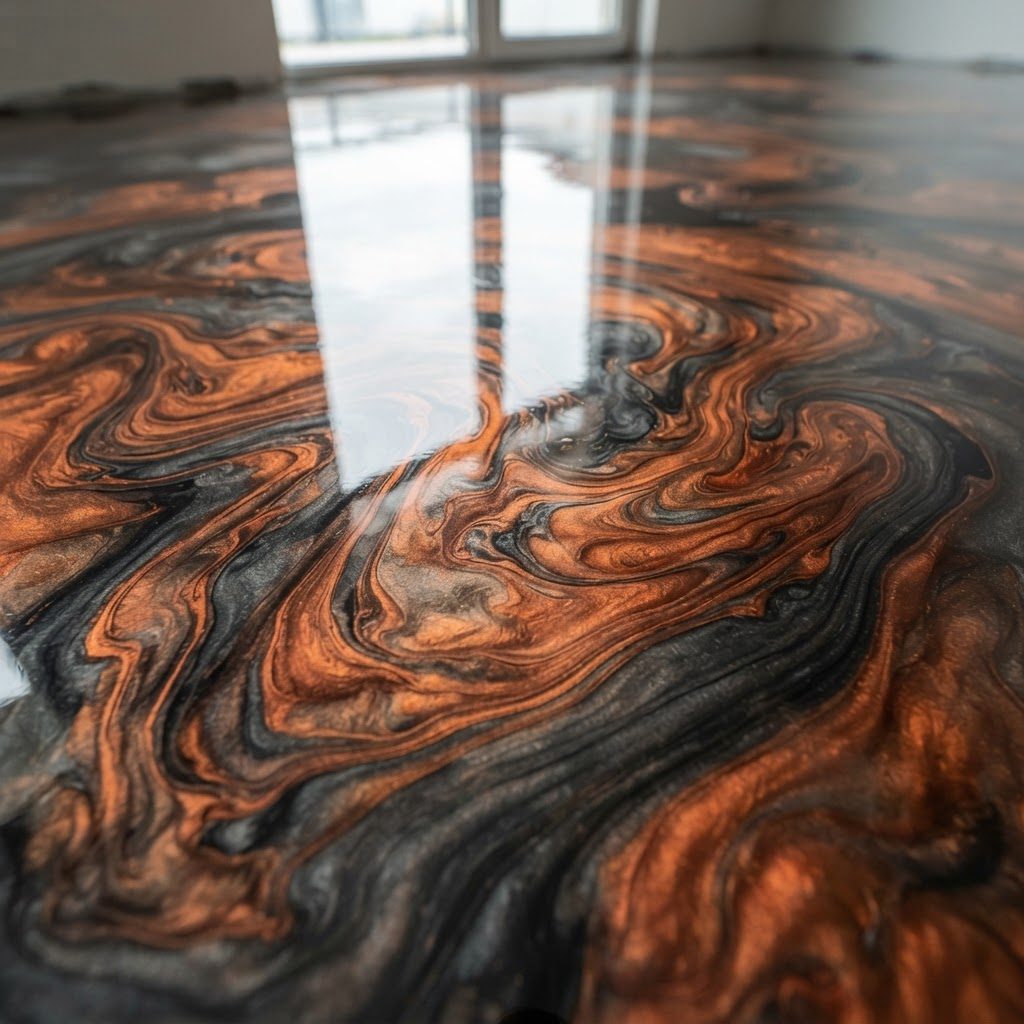
Solid colour
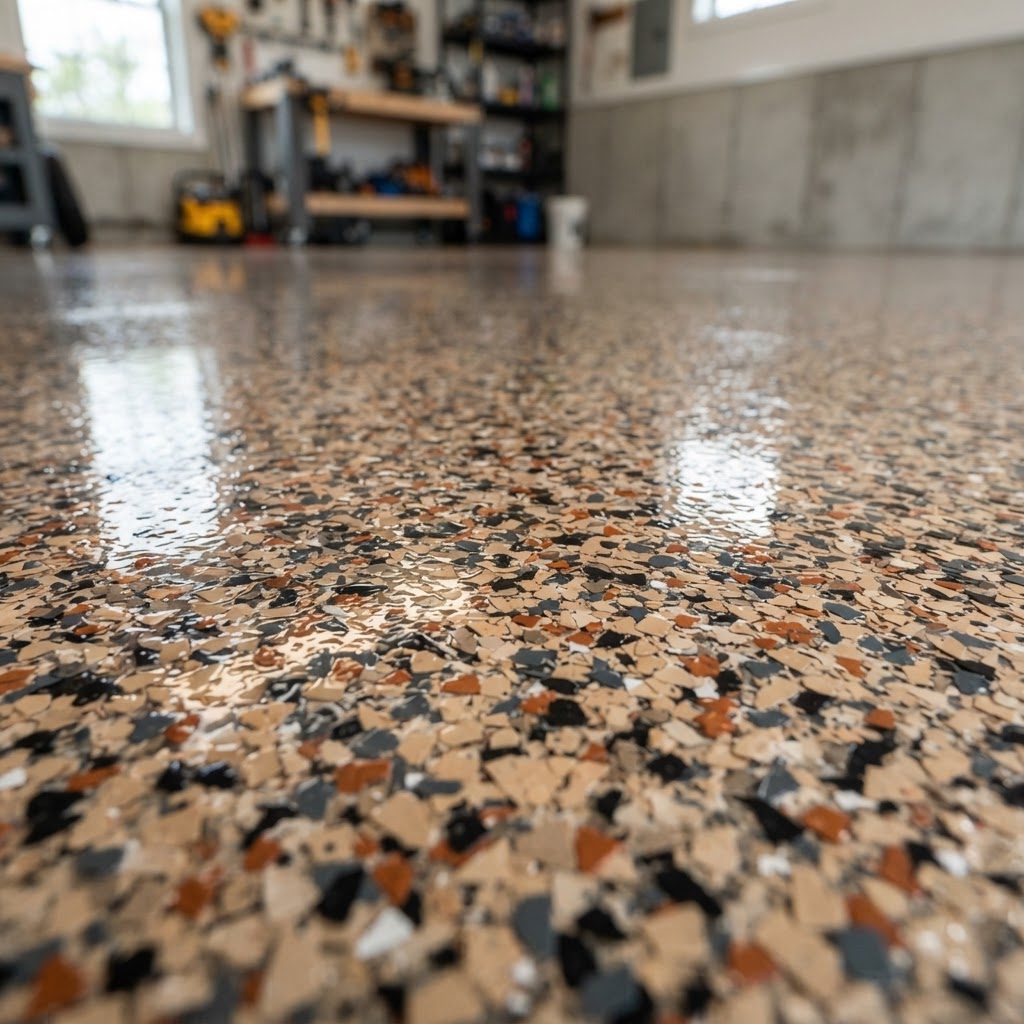
Subtle flake blend
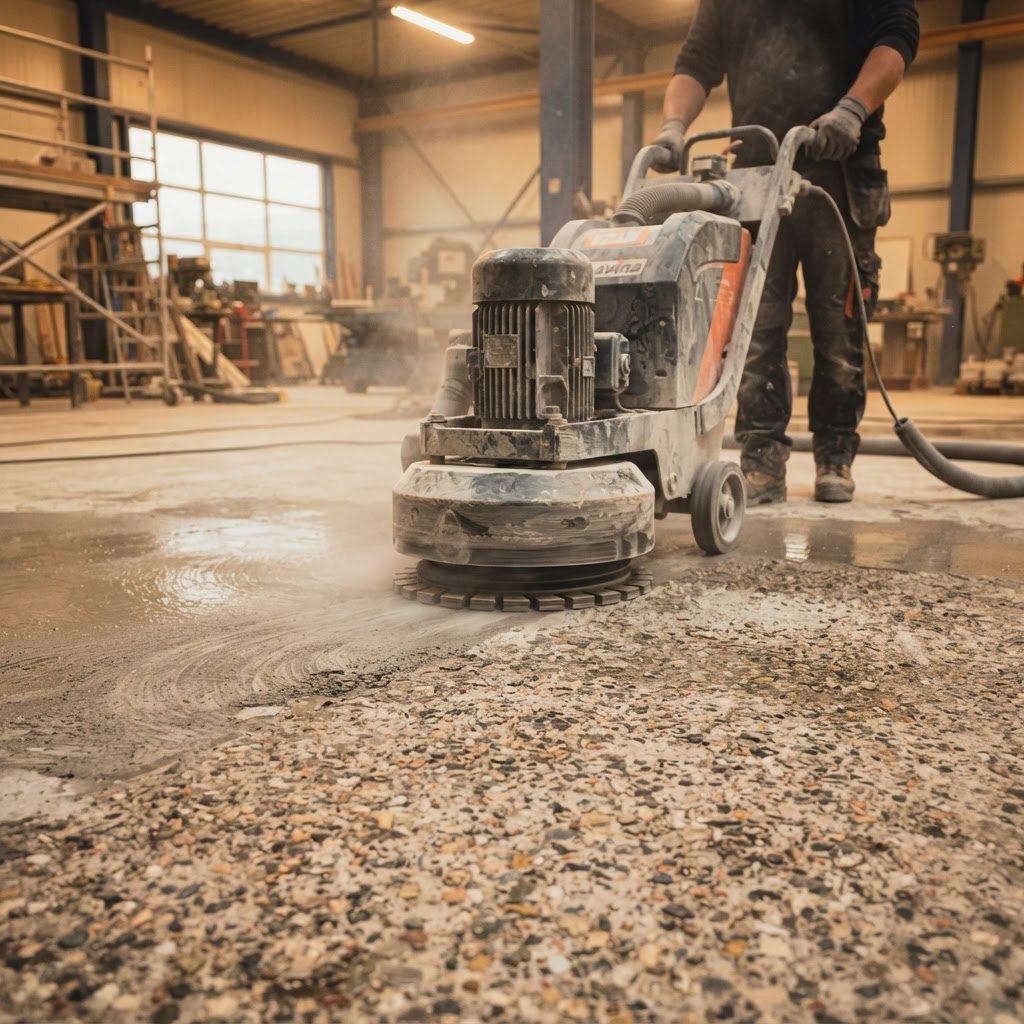
Prep before the pour
Basement floor questions, answered straight
-
A below-grade slab sits against soil and, often, a water table; so it can push vapor upward long after it looks and feels dry. Coat over that without testing and the moisture has nowhere to go but into the coating, causing blistering or delamination. We test vapor emission and relative humidity on every basement before we quote a system, and spec a vapor-tolerant base if the readings call for it.
-
Not usually for the floor itself; our moisture testing tells us whether the slab needs a vapor-tolerant system, and in most GTA basements it does the job without any additional membrane. If your basement has an active water intrusion or drainage issue, that’s a foundation problem to solve first, and we’ll tell you plainly if we see signs of one before we quote.
-
It feels noticeably warmer and less clammy underfoot than sealed or bare concrete, though it won’t add insulation on its own. Most homeowners pair it with an area rug in seating areas and find the seamless, non-porous surface a big step up from cold slab or musty carpet.
-
Yes; it’s one of the most requested basement uses we see. The seamless, non-porous surface won’t trap moisture or odour the way carpet or laminate can, holds up under gym equipment and foot traffic, and cleans up with a dust mop, which makes it a strong fit for rec rooms, home gyms, and basement rental units alike.