

Not every slab is ready to coat; we make it ready
Cracks, spalling, and pitting get repaired and, where needed, resurfaced with a polymer-modified overlay so your finished floor is dead flat and structurally sound before a drop of resin goes down.
A structural fix, not a skim coat
Resurfacing is not paint over problems. It is a measured repair sequence that rebuilds a damaged slab from the crack up, so whatever goes on top of it; ours or anyone else’s; actually stays put.
Crack chasing & spall repair
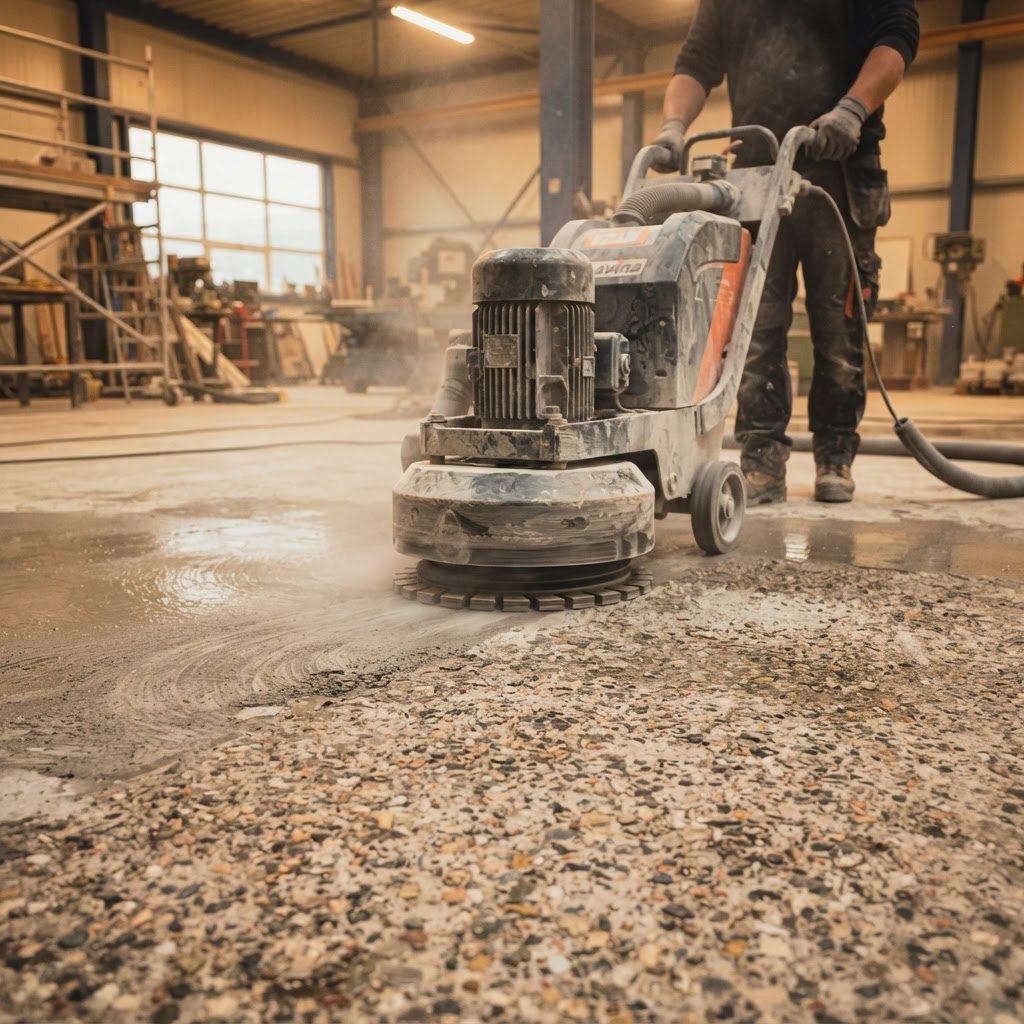
Every crack is routed out, cleaned, and filled with a semi-rigid structural epoxy; spalled and pitted areas are cut back to sound concrete before anything gets patched.
Polymer-modified overlay
Low spots, birdbaths, and worn or scaled areas get built back up with a trowel- or squeegee-applied overlay, feathered flush so the finished slab reads as one continuous surface.
Flat, sound, ready for finish
We re-check flatness and cure before handing the slab off; whether that means a broom-finish exterior seal, a stamped overlay, or a full epoxy system to follow.

Built to numbers, not to eye
1/4–1 in.
Overlay thickness range
100%
Cracks routed & filled
1–2 day
Typical install & cure
15 yr
Workmanship warranty
Repaired concrete, finished your way
Resurfacing is the prep step; but it stands on its own too, especially outdoors. Every sample below reflects real Resinate work, not a catalogue render.
Broom finish
Stamped overlay
Patio & exterior
Resurfacing questions, answered straight
-
If the slab is structurally sound; no major heaving, no failed sections below grade; resurfacing almost always costs less and takes less time than tear-out and repour. We assess for depth of damage, settling, and drainage before we ever recommend it; if a slab genuinely needs replacing, we will tell you that instead of selling you an overlay that will not hold.
-
Both. Indoors, it is usually the prep step that gets a garage, basement, or commercial slab flat and sound before we run an epoxy system over it. Outdoors; patios, walkways, pool decks; it stands on its own with a broom-finished or stamped overlay and an exterior-rated sealer built to handle freeze-thaw cycles.
-
Done right, a polymer-modified overlay bonds mechanically to the prepared concrete and ages with it; not as a coating that can peel off on its own. Every job carries our 15-year workmanship warranty, and exterior work gets resealed on the same schedule as the coating system it is paired with.
-
In most cases, yes. Every crack gets routed out and filled with a semi-rigid structural epoxy before the overlay goes down, so active cracks do not simply telegraph back through the new surface. The exception is a slab with real structural failure; settling, heaving, or a broken sub-base; which we will flag during the assessment rather than resurface over.