
Nobody enjoys the part of a website where the price is a paragraph explaining why there is no price. So here are actual numbers first, and the reasoning after.
The short answer
For a professionally installed resin floor in the Greater Toronto Area in 2026:
- $4 – $9 per square foot for most residential garage floors.
- $1,600 – $3,200 for a typical single garage (roughly 240–400 sq ft).
- $2,800 – $5,500 for a typical double garage (roughly 400–650 sq ft).
- Metallic and specialty finishes sit at the top of that range and above.
- Commercial and industrial systems are quoted per project, because build thickness and downtime windows drive them more than area does.
If a number you have been given is well under $4/sq ft, it is worth reading the rest of this page carefully. That price generally means one of three things: a thin single-coat product, no real surface preparation, or both.
What actually moves the number
1. The condition of your slab
This is the biggest variable, and it is why we quote after seeing a floor rather than over the phone.
- A sound, clean slab costs the least — grind it, prime it, coat it.
- Cracks need chasing out and filling with a structural repair compound before anything goes over them.
- Spalling or pitting (that flaky, pockmarked surface older GTA garages get from salt) needs patching or, when it is widespread, resurfacing first.
- Oil-soaked concrete needs degreasing and sometimes localised grinding deeper than the rest, because resin will not bond through contamination.
- Previous coatings have to come off entirely. Stripping an old failing paint job is real labour and it does add to a quote.
2. Size — and not the way you would guess
Cost per square foot drops as the floor gets bigger. Mobilising a crew, getting a grinder and a vacuum on site, mixing, and masking are largely fixed costs whether the floor is 240 or 640 square feet.
This is why a double garage rarely costs twice a single, and why doing the garage and the basement in one visit is meaningfully cheaper than two separate jobs.
3. The system and the finish
- Solid colour with a clear topcoat — the most economical, clean and bright.
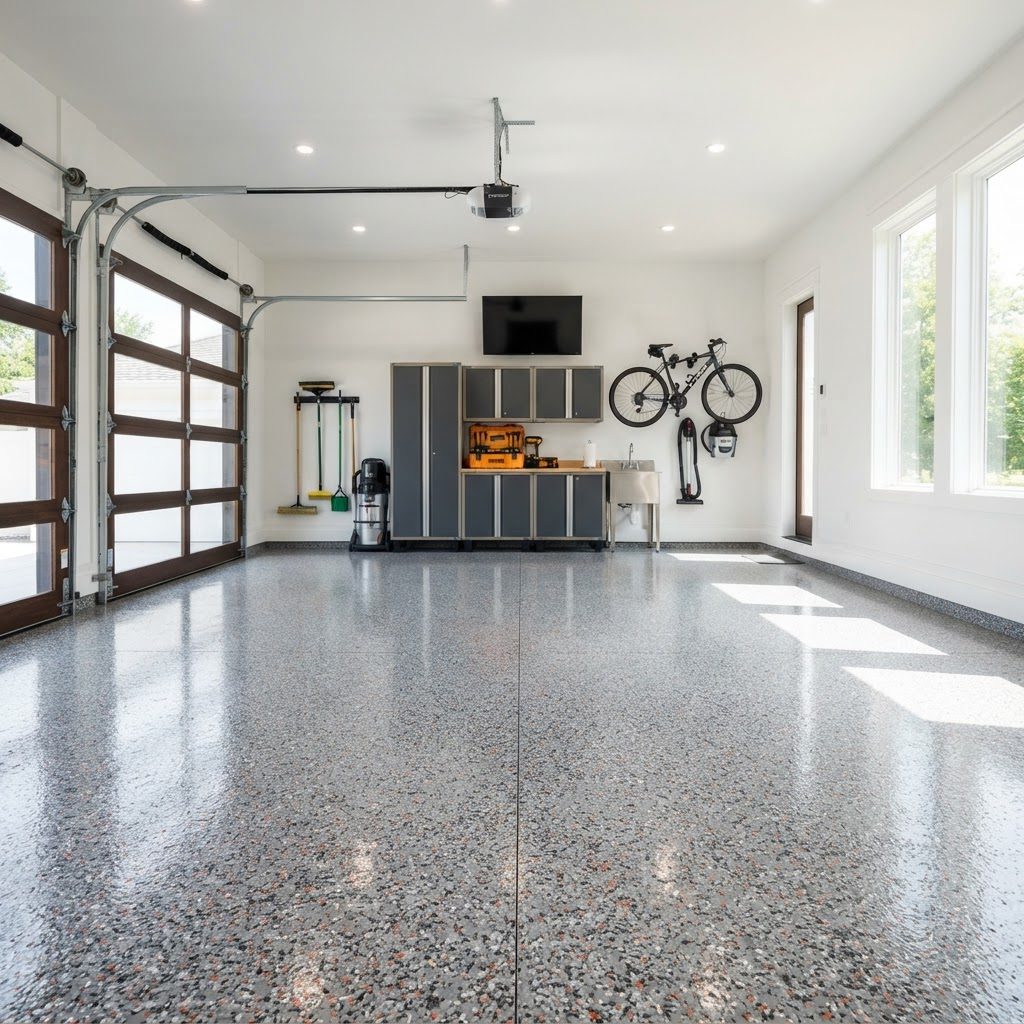
- Full flake broadcast — vinyl chips broadcast into the body coat, then sealed. Hides dust and tire marks, adds texture and slip resistance. The most popular choice for GTA garages and the middle of the range.
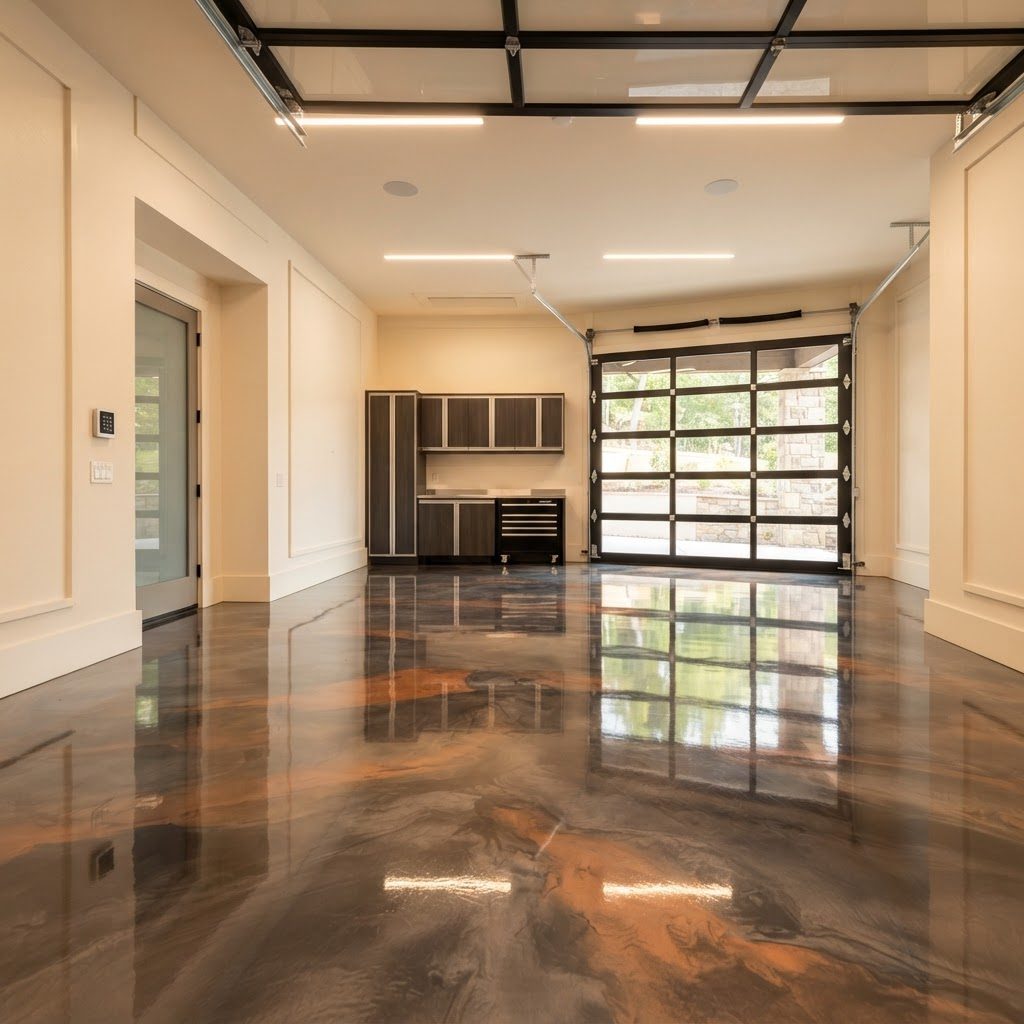
- Metallic — pigments moved by hand during the pour so no two floors are the same. Genuinely a finished-room look, and the most labour-intensive, so it sits at the top.
- High-build industrial — thicker, for commercial loads and forklift traffic. Priced by specification.
4. The topcoat
A polyaspartic topcoat costs more than a standard clear epoxy and is worth it in this climate: it cures fast enough for a same-day walk-on, it is UV-stable so it does not amber where sunlight comes through the door, and it is the layer that handles hot-tire pickup. Almost everything we install gets one.
5. Access and timing
Stairs, a tight side door, no parking for the trailer, a basement floor three flights down, or a commercial space that can only be shut for a weekend — all of it is real time, and honest quotes reflect it.
Why the cheapest quote is usually the most expensive one
Two quotes for the same garage can differ by 40% and be describing completely different amounts of work. Almost all of that difference is underneath the resin, where you will never see it.
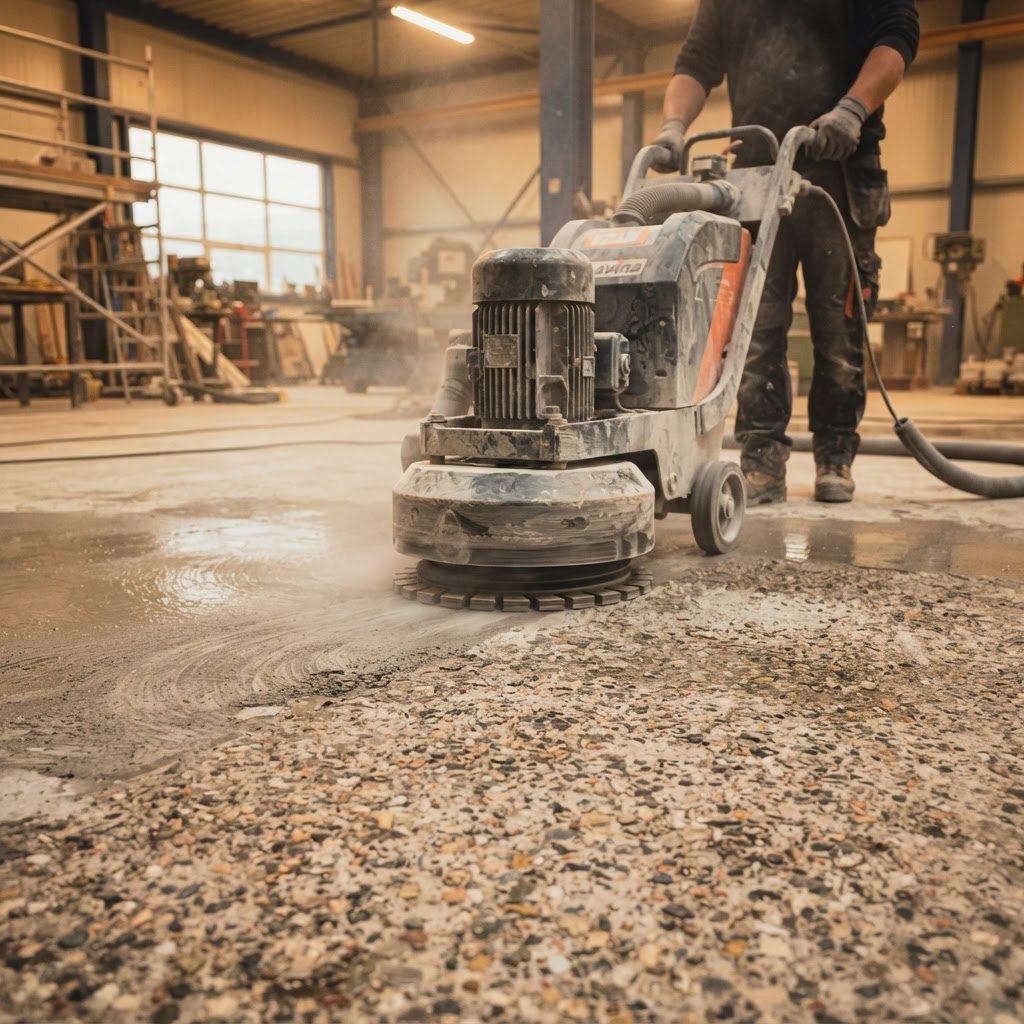
Preparation is between a third and a half of the labour on a proper install, and it is invisible the day the job is finished. Both floors look glossy on handover. Only one is still there in five years.
The three ways a low quote gets low:
1. Acid etching or pressure washing instead of diamond grinding. Etching does not produce a reliable surface profile on a power-troweled garage slab, which is what most GTA garages have. Without profile there is no mechanical key, and the floor peels in sheets later.
2. Fewer or thinner coats. A single roll-on coat at a fraction of the film thickness looks fine and wears through in a season.
3. No moisture testing. Vapour driving up through a slab from below will delaminate any coating no matter how good the resin is. Testing costs an hour. Skipping it costs the whole floor.
We wrote a full article on why preparation decides everything.
What should be in a written quote
Ask for these in writing, from us or from anyone else. A quote that will not put them in writing is telling you something:
- The preparation method, named — "diamond grinding" not "surface preparation".
- Crack and spall repair, itemised.
- Whether a moisture test is included.
- The number of coats and the system's total build thickness.
- The topcoat product and whether it is UV-stable.
- The warranty term, and specifically whether it covers adhesion — peeling — or only the finish.
- Cure times: when you can walk on it, and when you can park on it.
Financing
We offer flexible financing on larger residential and commercial projects, so a floor that needs doing properly does not have to wait for the right season. Ask about current terms when you request a quote.
Getting a real number for your floor
Measure the space, take two or three photos — including any cracks and any areas that look flaky or stained — and send them to us. We will come back with a firm price, usually within one business day, and we will tell you if your slab needs less work than you were expecting.
We quote after seeing the floor because the alternative is a low number on the phone that grows on install day, and nobody has ever been happy with that.